


As 2025 gradually draws to a close, it’s about time you start hearing your friends chanting “new year, new me”, as if enough chanting would help them kick the Grab habit they’ve been trying to kick for the past five years.
This time, your friends won’t be the only ones embracing the “new year, new me” mantra. Singapore will be doing so too, with a slate of new changes that will start in 2026 — from heavier speeding penalties, to a levy which will increase the cost of your flights.
Here are 15 changes which will affect you in 2026.
Heavier Speeding Penalties
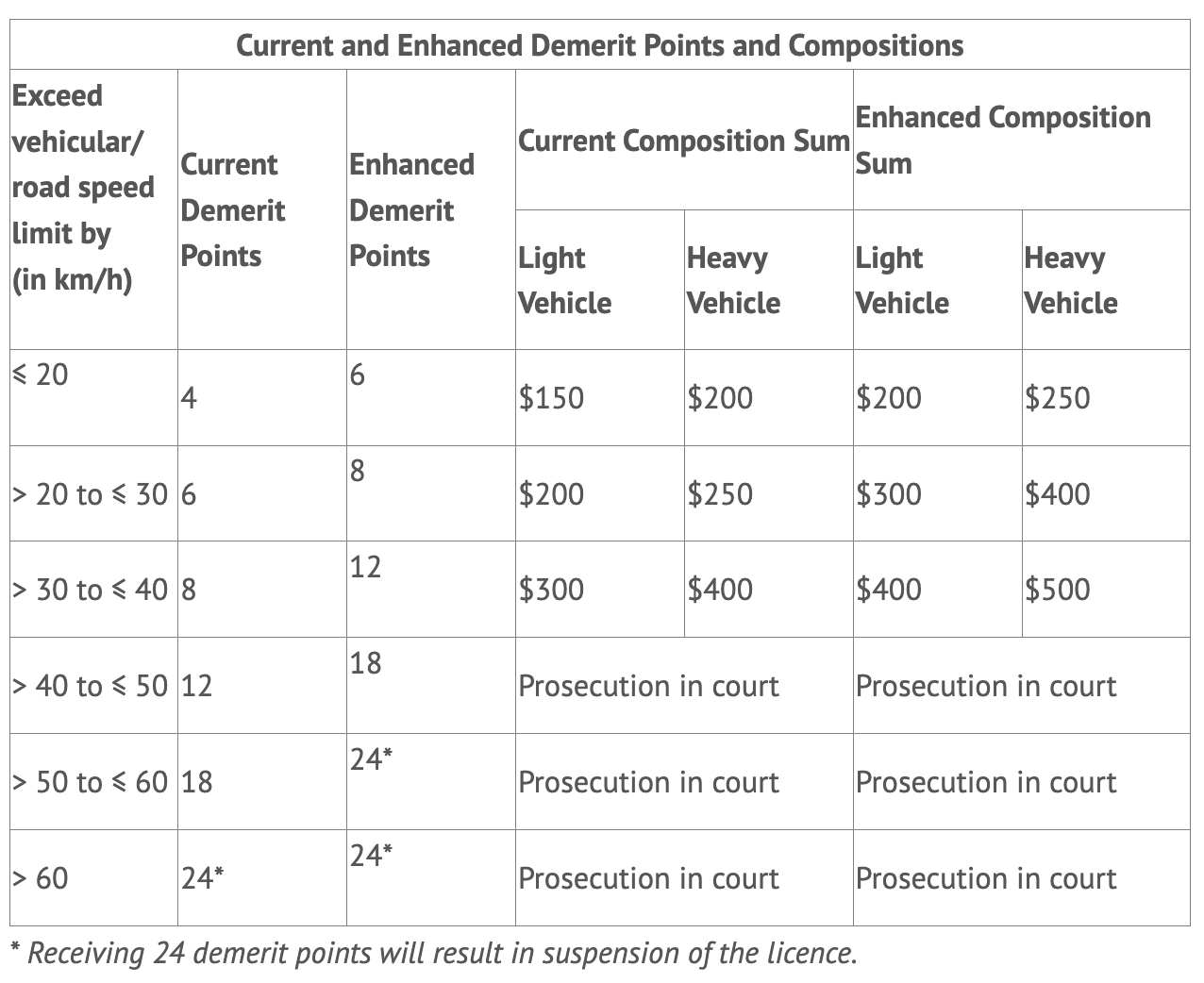
From 1 January 2026, stricter penalties will be implemented for speeding offences. This includes an increase in demerit points and higher composition fines.The precise change in demerit points and composition fine quantum depends on how much the motorist exceeds the speed limit by.
For example, if you exceed the speed limit by up to 20 km/h, you’ll receive six demerit points starting from 2026, up from the current four demerit points.
But if you exceed the speed limit by between 50 to 60 km/h, you’ll receive 24 demerit points starting from 2026, up from the current 18 demerit points.
And in case you forgot, receiving 24 demerit points results in a license suspension.
Hopefully this means that next year, we’ll see less chao ah bengs on the news for speeding in their BMWs.

$0.10 Deposit for All Pre-Packaged Drinks
Does the phrase “Beverage Container Return Scheme” (BCRS) ring a bell for you? If it doesn’t, then you should probably start reading more news — this scheme has been in the works for years, and will finally commence on 1 April 2026.
Under this scheme, consumers will pay a $0.10 deposit for bottled and canned drinks. This $0.10 sum will be added to the cost of your drinks.
The deposit will be returned to the consumer when the consumer returns the empty beverage containers at designated vending machines or supermarket collection points.
Between 1 April 2026 and 30 September 2026, which is the transition period for the scheme, you might encounter pre-packaged beverages with a BCRS deposit mark, and others without a BCRS deposit mark. This is because your drinks uncle may still be clearing his older beverage stocks which do not have the BCRS deposit mark.
This is how the deposit mark looks like:
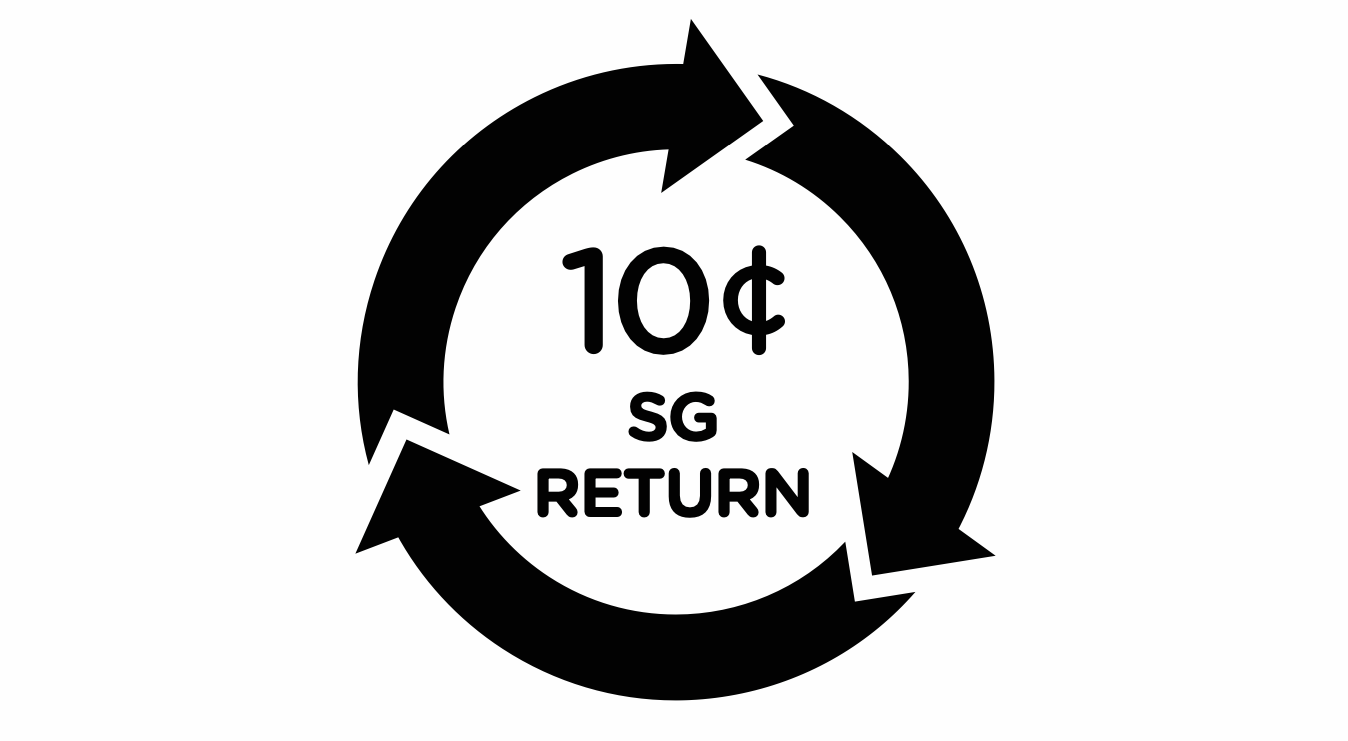
So, if you’re shopping for drinks in the transition period, take note that only the drinks with the BCRS deposit mark have the $0.10 deposit applied to it. If you return beverage containers without the BCRS deposit mark to the designated vending machines and collection points, there’s a chance you won’t have $0.10 returned to you, since the $0.10 deposit did not apply to those beverages in the first place.
It is only from 1 October 2026 onwards that all regulated beverage products sold in Singapore must be labelled with the BCRS deposit mark. Or if you still see drinks without the BCRS deposit mark even then, well, whether you want to bao toh your drinks uncle is up to you.
JB-SG Rapid Transit System Link
For those of you who can’t help but head to JB every weekend, you’ll finally have an alternative route to cross the causeway next year.
The Johor Bahru-Singapore Rapid Transit System (RTS) Link, which has been in the works for ages, will finally be commencing passenger service next year. Specifically, the RTS Link is targeted to commence passenger service by December 2026.
With the RTS Link, it’ll take just 5 minutes to commute between JB and Singapore. Yes — next year, your lok lok will be just 5 minutes away.
Shiok!
New MRT Stations Along Circle Line, Thomson-East Coast Line, and Downtown Line
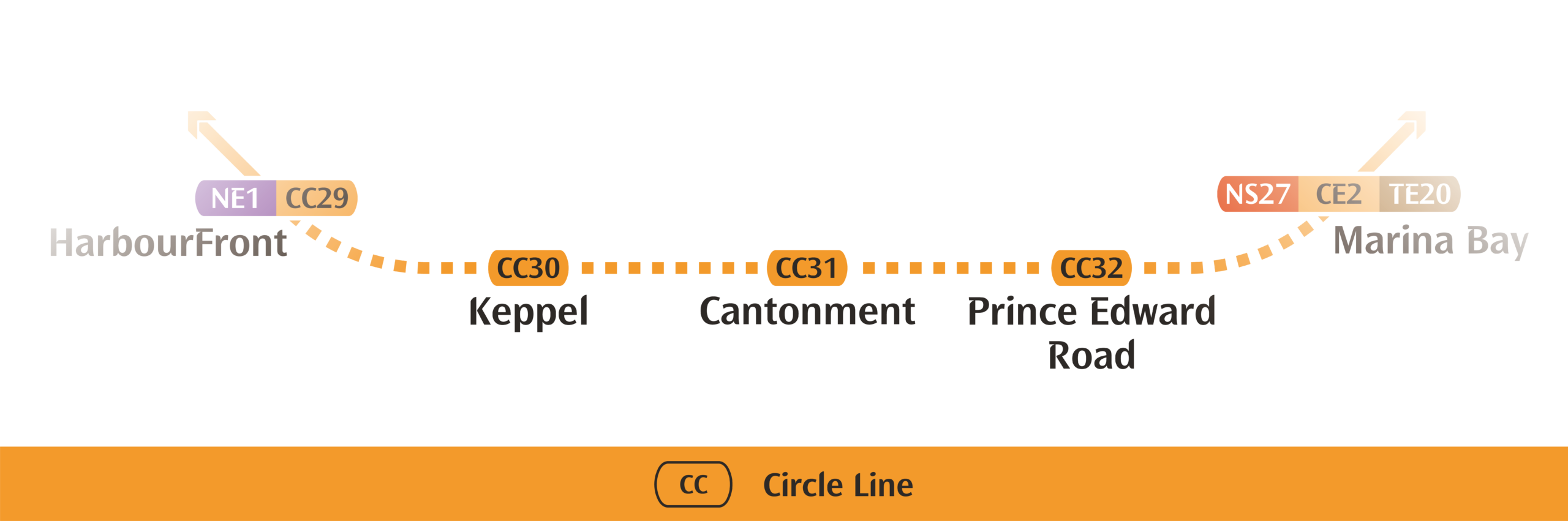
Next year, the Circle Line will finally be a real circle — all thanks to the opening of three new stations along the Circle Line. In the first half of 2026, Keppel, Cantonment, and Prince Edward Road stations will open to complete the Circle Line.
This closes the loop between Harbourfront and Marina Bay stations.
But those aren’t the only new MRT stations opening in 2026.
Those living along the Thomson-East Coast Line and Downtown Line also have cause for joy — two new MRT stations will be opening along each line.
The new kids on the block for the Thomson-East Coast Line are Bedok South and Sungei Bedok stations, while that for the Downtown Line are Xilin and Sungei Bedok station.
Yes, you read that right — Sungei Bedok appeared twice in that sentence. You know what that means — Sungei Bedok will connect the Thomson-East Coast and Downtown lines.
Bedok South, Sungei Bedok, and Xilin stations will be opening in the second half of 2026.
No Smartphone Use in Secondary Schools
For the parents exasperated with the constant “67!!!” coming from their child’s rooms every night — this one’s for you.
In case you forgot, from January 2026, secondary school students will not be allowed to use smartphones and smartwatches at all times during school hours. This includes during recess and CCAs.
Instead, students must keep their smartphones and smartwatches in designated storage areas like lockers, or in their school bags during school hours.
This change aims to help children and their parents develop healthy digital habits. Hopefully, next year, all you parents will be plagued by less brainrot — perhaps this can be one of your new year’s resolutions.
Increase in Minimum Qualifying Salary for Renew Employment Pass and S Pass
From 1 January 2026, the minimum qualifying salary to renew Employment Passes will increase to $5,600 for all sectors except financial services, up from the current minimum of $5,000. For renewal of Employment Passes in the financial services sector, the minimum qualifying salary will increase to $6,200, up from the current minimum of $6,200.
Similar changes will be happening in relation to S Passes too.
From 1 September 2026, the minimum qualifying salary to renew S Passes will increase to $3,300 for all sectors except financial services, up from the current minimum of $3,150. For renewal of S Passes in the financial services sector, the minimum qualifying salary will increase to $3,800, up from the current $3,650.
Increase in CPF Ordinary Wage Ceiling
From 1 January 2026, the CPF Ordinary Wage ceiling will also be increasing. Specifically, it will be increasing from $7,400 to $8,000.
Aiya… Everything also increasing, only my bank balance not increasing…
Although, to be honest, many of us earning below that sum don’t have to concern ourselves with this change.
Increase in Shared Parental Leave
If you watched the National Day Rally, you’ll probably remember hearing about shared parental leave. From 1 April 2025, eligible working parents found themselves entitled to 6 weeks of shared parental leave.
If you’ve yet to hear about the leave scheme, it’s literally what it sounds like — leave entitlement that is shared between parents.
But the shared parental leave scheme is about to get even better. From 1 April 2026 onwards, eligible working parents will be entitled to 10 weeks of shared parental leave, up from the current 6 weeks.
So, if you really want that extra 4 weeks of leave, maybe you can try telling your unborn baby to have a little more patience and wait till 1 April 2026 to come into this world. You know what some people say — you’ve got to teach them young. In this case, teaching your child how to maximise leave entitlements.
You can find out more about the shared parental leave here.
Increase in Retirement and Re-Employment Age
From 1 July 2026, the official retirement age in Singapore will increase from 63 to 64. Alongside the increase in retirement age, the re-employment age will also increase from 68 to 69.
What does this mean for you?
Well, the long and short of it means that older workers who wish to continue work, can do so for longer. Your towkay is not allowed to dismiss you based on your age before you reach the prescribed minimum retirement age.
Establishment of the Online Safety Commission
Is your crazy ex still harassing you online? A new government agency will be set up next year to help you with these sort of problems.
I mean, not your relationship problems, but the problem of online harms.
In the first half of 2026, the Online Safety Commission will be established to support victims of online harms. One of the ways the agency will do so is to help victims identify the perpetrator of online harms upon the victim’s request, so that the victim can commence legal proceedings against the perpetrator.
Victims can also request the agency to issue directions to the relevant online platform to take down the harmful content.
Food Handlers No Longer Need to Wear Masks and Spit Guards
From 1 January 2026, food handlers no longer need to wear masks and spit guards. If you didn’t know, the wearing of masks and spit guards used to be part of the Singapore Food Agency (SFA)’s licensing conditions for food establishments.
According to SFA, food handlers are no longer required to wear masks and spit guards as part of licensing requirements next year because “there is low food safety risk of food handlers not wearing masks or spit guards”. Instead, SFA adds that food contamination is mainly a result of inadequate sanitation, poor handling and temperature management, and contact between raw and ready-to-eat foods.
Nonetheless, SFA also encourages food handlers to wear masks or spit guards as good food safety practices.
So, don’t be too shocked if you walk downstairs to buy wanton mee on New Year’s Day, and uncle doesn’t have a mask or spit guard on.
Increase in SingPost Postal Rates
Increase here, increase there — even SingPost postal rates aren’t exempt from price increments.
From 1 January 2026, SingPost will be increasing the rate for regular domestic mail by $0.10. This means that next year, the price of standard regular mail will be $0.62, while the price of standard large mail will be $0.90.
Well, that’s yet another excuse that Carousell sellers can now use to overcharge for mailing.
The rate for domestic bulk mail services, which is mostly used by corporate customers, will also see an increase of between $0.11 to $0.32 from 1 January 2026. The precise increment depends on the type, size, and condition of the mail.
Sustainable Aviation Fuel Levy
Next year, your flights will be getting more expensive too.
A new sustainable aviation fuel levy will apply from 1 April 2026 for flights departing from 1 October 2026.
If the dates are confusing you, it’s okay. All it means is that if you book your flight from 1 April 2026 onwards, and your flight departs from 1 October 2026 onwards, then you’ll have to pay this new levy.
Otherwise, congratulations — you got away with having to pay the levy.
The new levy, as its name suggests, relates to sustainable aviation fuel. Specifically, the levy corresponds to the projected price premium of sustainable aviation fuel over conventional jet fuel, and other associated costs.
The levy could be anywhere between $1 to $41.60, depending on how far your destination is, as well as your cabin class.
To all my fellow broke Singaporeans, you’ll be happy to hear that your weekend Bali trip in economy class will only attract a levy of $1. However, the story for those travelling in premium cabins to the Americas is very different.
You can find out more about the different levy rates here.
High-Risk & Undesirable Travellers Barred from Boarding Singapore-Bound Flights
From 30 January 2026, Singapore will be making a move to further strengthen our border security — high-risk and undesirable travellers will be barred from boarding Singapore-bound flights.
These flights will be issued no-boarding directive (NBD) notices, listing travellers identified as undesirable or who do not meet our entry requirements. These travellers will then be barred from getting on the plane.
Yes, you read that right — these travellers won’t even be allowed to board the plane. They simply have to turn back and go home.
Increase in CareShield Life Payouts
Last but not least, from 2026 onwards, those enrolled in the national disability insurance scheme CareShield Life will also see an increase in payouts and premiums.
As for payouts, the annual growth rate of CareShield Life payouts will be doubled from 2% to 4%.
To sustain the higher payouts, premiums will increase too. The premiums may increase by an average of up to $75 annually.
Want to find out more about the changes above? Blue Cat breaks it all down for you in the videos below:
Here’s the REAL reason why everyone is hanging plushies on their bags, simplified for you: